Get 20% off orders over £50 with discount code REWIND
 01423 319041

What do you want to convert?
Back to Blogs
How Can I Play My Old Cassettes?
Sean Parle • 18 December 2025
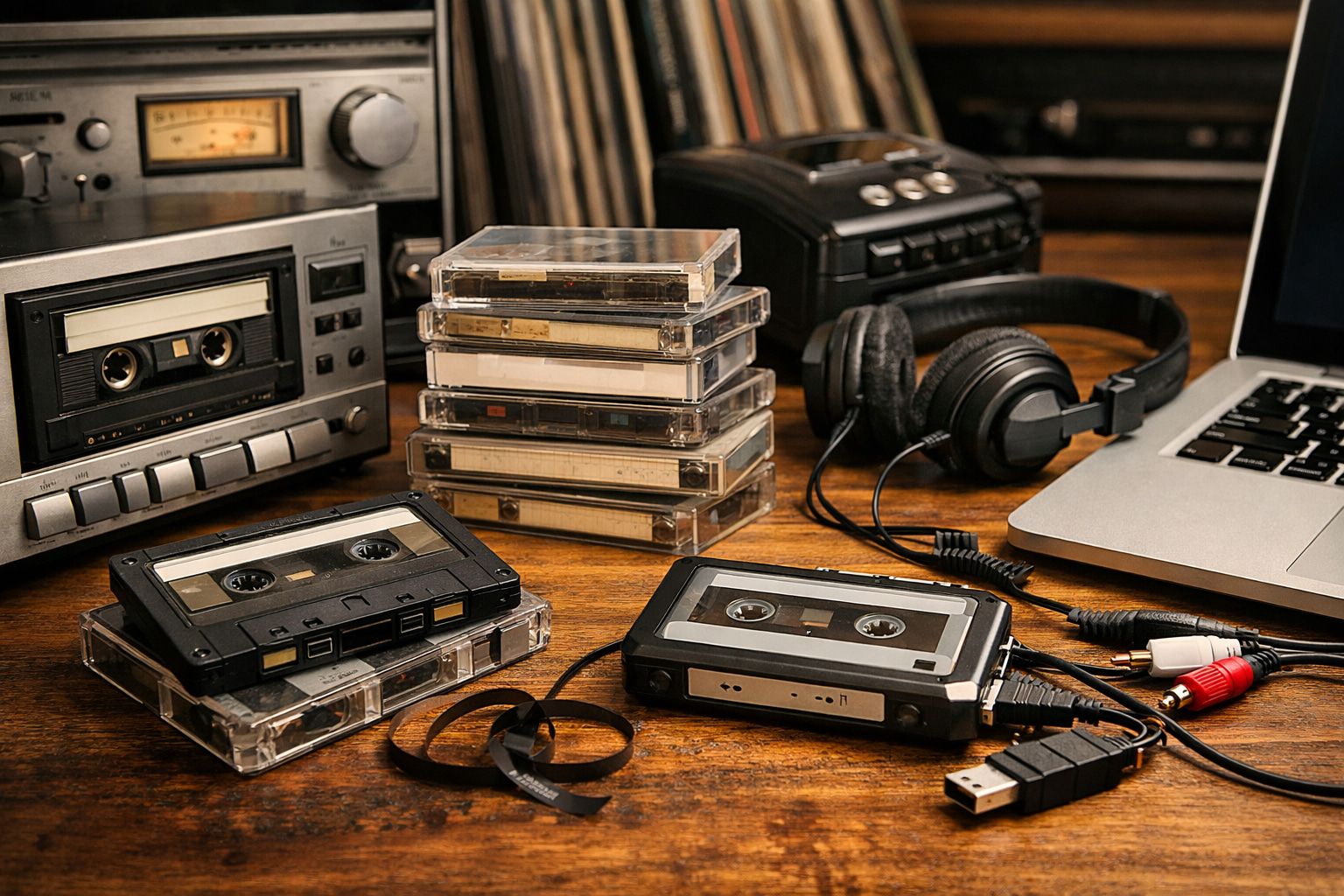
You can play your old cassettes by using a working cassette player, connecting a cassette deck to a hi-fi system, or transferring the recordings to digital files, and the best option depends on the tape’s condition, sound expectations, and whether you want to keep the audio for the future.
We’ll cover all of the above in more detail below.
Key points
Cassette tapes usually fail due to storage damage, not age alone
Playback equipment matters as much as the tape itself
Modern cassette players trade quality for convenience
Digitising stops further wear and simplifies access
What type of cassette do you have?
In almost every case, the tape people mean is the Compact Cassette. Introduced by Philips in 1963, it became one of the most widely used audio formats in history. By the late 1970s it had replaced reel-to-reel for home use and stayed dominant until CDs took over in the 1990s. Music albums, radio recordings, mixtapes, interviews, language courses, and family messages were all commonly stored on this format. They have experienced somewhat of a renaissance in recent years, due to Gen Z’s interest in ‘retro’ formats from the 90’s - check out our article Are Cassette Tapes Back In Fashion for more on that.
Other cassette types are far less common. Microcassettes were used mainly in dictation machines and some early answering machines. These tapes are physically smaller and cannot be played in a standard cassette deck. There were also proprietary office formats that were never intended for consumer use. These are difficult to play today without specialist equipment.
At Digital Converters, well over ninety percent of audio tapes we see are the common Compact Cassettes. Many arrive in good cosmetic condition but still suffer from internal issues. Tape stored tightly wound for years can develop edge curl or uneven tension. Pressure pads may have hardened or fallen away. Identifying the exact format and checking the shell condition before playback avoids costly mistakes.
Check if your old cassette player still works
Many people still have a Walkman, a hi-fi deck, or a boombox tucked away in a cupboard. Before spending any money, give it a careful test.
Start by checking the basics:
Insert fresh batteries or plug in the power supply.
Put in a tape you are not precious about.
Press play and listen for steady movement. If the audio wobbles, this usually means the internal belt has stretched or lost grip. These belts weaken after years in storage because rubber decays over time.
If the tape stalls or the machine refuses to turn the reels, the motor may be running but the internal pulleys are slipping. That is another classic belt issue.
If the sound is muffled, clean the head and pinch roller. A cotton bud dipped in isopropyl alcohol works well. Move it gently across the head face until no brown residue comes off. Many never cleaned their machines, so this can bring back surprising clarity.
If the machine tries to pull the tape out of the shell, stop straight away. The pinch roller may have hardened or cracked, or the capstan could be misaligned.
These repairs are possible but rarely cost effective on cheap portable players. Hi-fi decks are more worthwhile to repair because their mechanisms are better built.
If you have other formats in storage, such as VHS or vinyl, consider checking those too. For example, many people only notice problems with old media when they try to use it again, which is why guides like the one on VHS tapes degrading are helpful.
Using an original cassette player
Using an original cassette player often feels like the most natural solution. Older hi-fi decks, especially those made in the 1970s and 1980s, were generally built with stronger motors and better speed control than modern budget players. When working properly, they can still produce very respectable sound.
Age, however, introduces risk. Rubber drive belts degrade over time even if the machine has not been used. They stretch, crack, or become sticky. This causes slow playback, unstable pitch, or sudden tape jams. From our experience, many people damage tapes not because the tape is faulty, but because the player has quietly deteriorated.
Before playing anything important, the machine should be tested with a tape you can afford to lose - not the ones containing your priceless family memories! Heads, pinch rollers, and capstans should be cleaned, as dirt and oxide build-up increase friction and can scrape the tape surface. We have seen recordings permanently damaged by players that appeared fine until the moment they failed mid-play. However - even cleaning these components of a tape deck can be tricky, and is really best left to the professionals.
Buying a second hand cassette player
Second hand players are everywhere once you start looking. Charity shops, boot sales, Facebook Marketplace, and eBay all have regular listings. Quality varies wildly, so a quick checklist helps.
Bring a cassette and some batteries when buying in person. Test rewind, fast forward, and record if available. Listen for audible scraping or squealing, which hints at dry bearings. Make sure the reels turn freely on both sides of the cassette, as a stuck take-up reel will destroy tapes.
Walkmans are portable and nostalgic, but many spent decades unused, which is exactly how belts perish. Boomboxes often hold up better because they were sturdier from the start. A good hi-fi deck, especially a dual-well model from the late 80s or 90s, offers the best performance.
Those interested in retro gear might also like reading about cassette tapes coming back in fashion.
Prices vary. In the UK, simple portables can go for £10 to £40. A reliable boombox might cost £40 to £80. A respected hi-fi deck from brands like Denon, Sony, Pioneer, or Technics can range from £50 to £150 depending on condition.
Avoid listings with phrases like “probably works” or “untested”. That usually means it’s knackered!
Buying a new cassette player today
New cassette players are widely available and often marketed as retro lifestyle products. They appeal to people who no longer own old equipment but want quick access to their tapes. These players range from handheld units to USB cassette decks aimed at easy digitisation, to lightweight portables aimed at nostalgia buyers. They run off AA batteries, have simple motors, and often include a USB output for basic digitisation.
At the cheaper end, expect straightforward playback with modest audio quality. The mechanisms are usually made from thin plastic parts that do the job but rarely sound impressive. My personal view is that these devices are fine if you just want to hear an old mixtape or check your tapes before digitising them. They are less convincing if you value sound quality or have tapes with sentimental value.
Most new units can cost between £20 and £40, such as this Tomashi player on Amazon, or you can spend a lot more on a retro designer player like the We Are Rewind player, currently £129 at Richer Sounds.
In practice, most modern players use inexpensive mechanisms, and are simply not built to anything like the same standards as the old gear made in the 80’s and 90’s. Motors are lighter, speed regulation is less accurate, and noise levels are higher. For spoken-word tapes, this may be acceptable. For music, limitations become obvious. Bass response is weak, pitch can wander, and background noise is more noticeable.
There are high-end HiFi options too of course, with the pick of the bunch these days (in our opinion) being decks made by Teac, such as the W1200 - available from Richer Sounds for £419 as of the time of writing. Unfortunately, you really do have to spend this kind of money to beat the old Japanese or British decks from the 80’s and 90’s.
At Digital Converters, we test modern players primarily as access tools rather than quality playback devices. Consumer Reports has also noted that many current cassette players focus on cost and convenience rather than precision engineering. They are useful, but they should not be treated as a long-term solution for valuable recordings.
Connecting a cassette player to modern speakers
Many cassette players only have a headphone output. This is perfectly usable with modern speakers.
If you have a Bluetooth speaker with an AUX port, connect a 3.5mm cable from the player to the speaker. Set the player’s volume to roughly halfway. If the sound is loud or distorted, drop the level on the player rather than the speaker.
If you have a hi-fi amp, use a 3.5mm to RCA cable. Plug the RCA ends into any line-level input such as AUX or CD. Avoid phono inputs, as those are built for turntables and will distort the signal.
Some older hi-fi decks provide a line out socket. Use this if available, as it gives the cleanest signal.
If you are sorting other old media for modern listening, it may be worth looking at advice on playing or converting reel to reel audio, since many households find long forgotten recordings in this format in the attic too.
Playing cassettes in modern cars
Cars with factory cassette decks are becoming rare, but some older models still have them. Before inserting a tape, clean the slot with a quick air blast and check the pinch roller with a torch if possible.
If your car does not have a cassette deck, look for a cassette adapter that plugs into your portable player. These were popular in the 90s and early 2000s. They contain a small magnetic head that passes the audio through the car’s system. These adapters do work, though the sound is slightly softer than a direct connection.
Many drivers eventually move to digital audio instead, simply because it is easier and protects the tapes.
Common problems when playing old cassettes
Cassette tapes degrade chemically and mechanically. Oxide loss increases background hiss and reduces clarity. High frequencies fade first, making recordings sound dull. Speed issues occur when tape friction increases or the shell warps slightly.
Sticky tape is one of the more serious problems. The tape resists movement, squeals, or stops altogether. According to research from the Image Permanence Institute, heat and humidity accelerate binder breakdown in magnetic tape, even when tapes are not being played.
We frequently see tapes that were rarely used but stored badly. A tape left untouched in a loft for twenty years can be in worse condition than one played regularly but kept indoors. Storage history matters more than usage history.
How to clean and prepare a cassette tape
Preparation reduces the chance of damage. Fully rewinding and fast-forwarding the tape once helps loosen tape layers that have settled over time. This simple step can prevent sudden snags.
Inspect the cassette shell if possible. The pressure pad should be springy and centred. If it is missing or hardened, sound quality drops sharply. Some shells can be repaired, but many are best handled carefully or transferred professionally.
Cleaning the playback equipment is essential. Dirty heads reduce clarity and increase wear. In our experience, many people underestimate how much dirt accumulates inside players. Skipping cleaning is one of the most common causes of poor playback results.
Transferring cassettes to digital
Digitising converts the analogue signal into a digital file that can be played repeatedly without touching the tape again. Home methods include USB cassette players and audio interfaces connected to cassette decks.
Results depend heavily on equipment quality and setup. Speed accuracy, head alignment, and monitoring all affect the final file. Professional transfer uses calibrated decks and controlled levels.
At Digital Converters, many clients are surprised by how much audio survives on tapes they assumed were badly degraded. Careful transfer often reveals clearer sound than expected. Our article ‘How Long Do VHS Tapes Last’ explains how and why magnetic tape degrades.
Why digitising is often the better option
Cassette playback is a mechanical process that always causes wear. Digital files do not degrade through use. Once transferred, recordings can be backed up and shared without risk.
Digitising also removes dependence on ageing hardware. Cassette players are becoming harder to repair as parts disappear. Digital audio remains accessible on modern devices with minimal effort.
From our experience, people often plan to listen once, then realise the value of keeping a permanent copy. That realisation usually comes after hearing a familiar voice or forgotten recording again.
When professional help makes sense
Professional handling is important when recordings are irreplaceable. Family voices, interviews, band demos, and oral histories deserve careful treatment.
We regularly receive tapes after failed DIY attempts using poor equipment. In some cases, damage cannot be reversed. Specialists use serviced machines, controlled environments, and methods that reduce stress on fragile tape.
If a tape carries emotional weight, it should be treated as delicate media, not casual playback material. Use a specialist, professional solution such as our cassettes to digital conversion service instead of taking the risk.
Protecting your old tapes
Old cassettes are sensitive to heat, dust, and magnets. Store them upright in a cool, dry cupboard. Keep them away from speakers, as strong magnets can damage the recordings. If the tape has slack, wind it gently to the end and back again. This evens the tension and reduces the risk of snagging.
If a shell feels sticky or cracked, replacement shells are easy to find online. Transferring the reels is simple and gives an old tape a new lease of life.
Final thoughts
Old cassettes can still be played, but how you approach playback matters. Basic equipment satisfies curiosity. Hi-fi decks improve control and sound. Digitising protects recordings from further loss.
From our experience at Digital Converters, the safest assumption is that every cassette has limited plays left. Listening is possible, but preserving what matters is the smarter choice.