Get 20% off orders over £50 with discount code REWIND
 01423 319041

What do you want to convert?
Back to Blogs
What Are The Different Types of Videotapes Through The Years?
Sean Parle • 15 March 2023
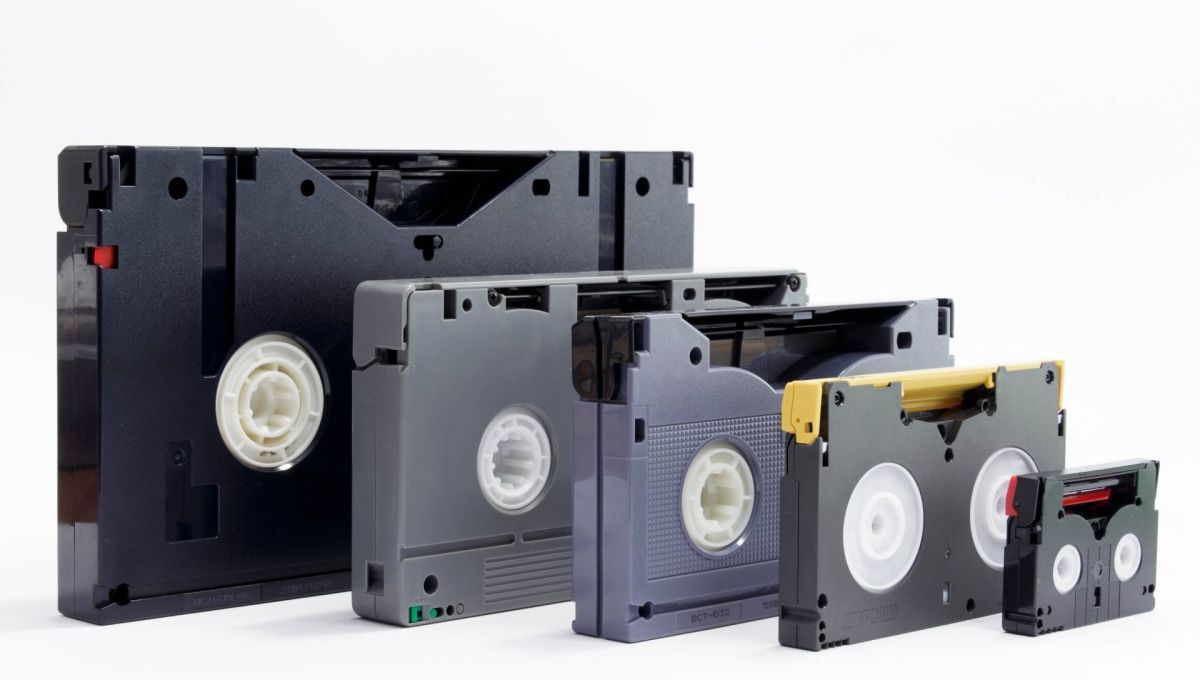
Can you believe videotapes have existed for over sixty years?!
It's easy to forget magnetic tape's importance for developing amateur filming and TV broadcasting we know today - especially since everyone streams films and TV shows digitally now. But, for years, large tech companies fought for the most popular videotape with the highest quality video.
Find out how magnetic tape developed from VHS to digital streaming with our timeline of the most popular videotapes over the last sixty years.
1956: 2-Inch Quadruplex Videotape

Source: Techcrunch
Hello, magnetic tape! The beginning of videotapes came in the form of a 2-inch reel called the Quadruplex. Broadcast television predominantly used Quadruplex because it was cheaper than cine reel and had a good picture quality. While Quadruplex was video, many families also recorded audio on reel‑to‑reel tapes; our service can convert those audio reels to digital.
1969: U-matic

Source: Obsolete Media
The traditional plastic casing comes into the market with the U-matic. Television news quickly adopted the U-matic as videos could be shown straight away, unlike 16mm cine film that filmmakers had to develop in the darkroom first.
1975: Betamax

Source: Illinois Library
Introducing one of the biggest shake-ups in film recording: Betamax, the first consumer videotape. Watch whatever, whenever. Consumers could now record television programs to watch at another time - no more missing your favourite soap!
1976: VHS

Source: Adobe Stock Images
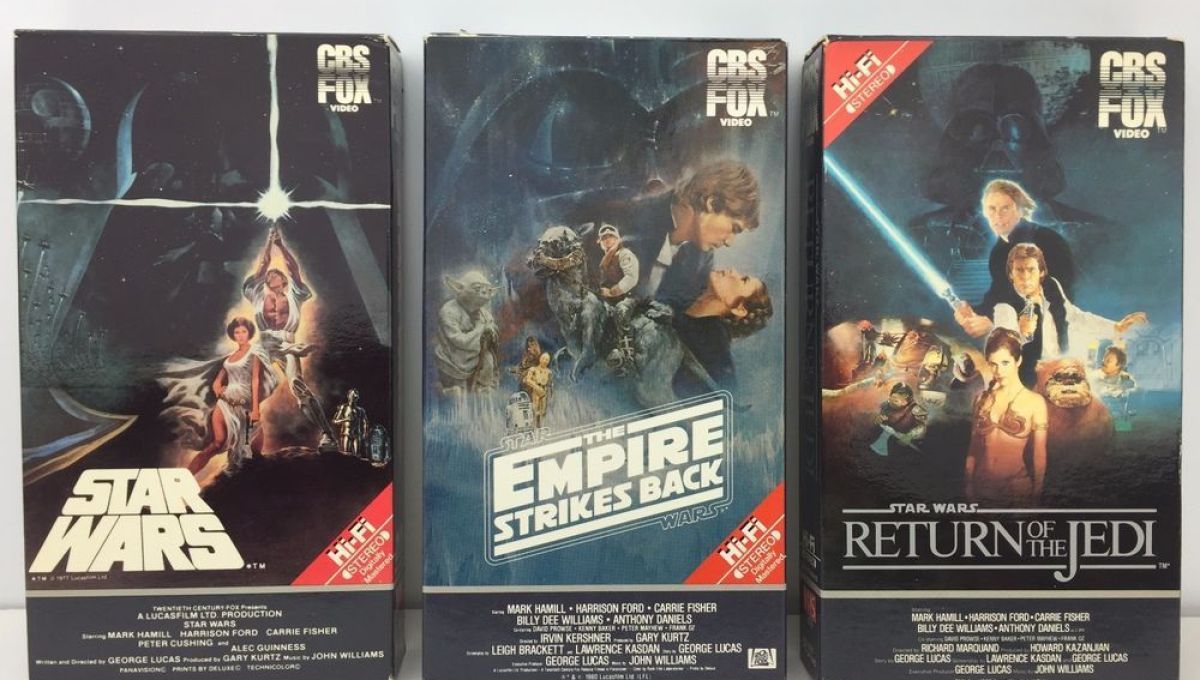
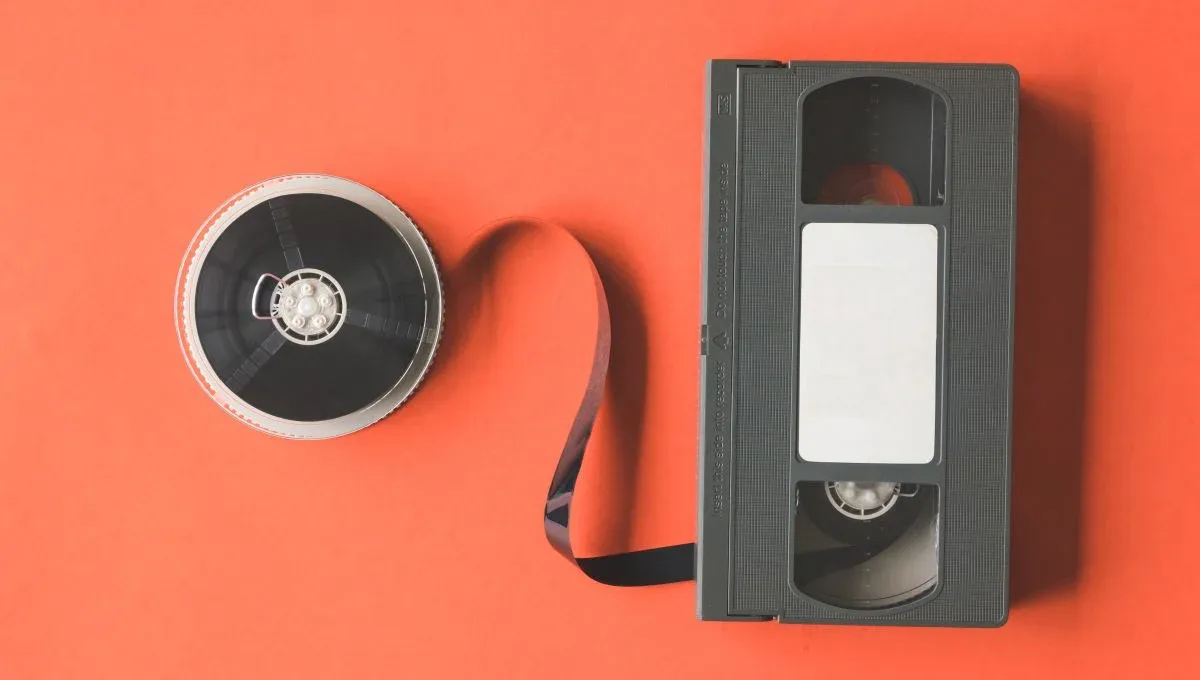
JCR developed a cheaper alternative for television recording. They designed a tape that could play on anyone's television. Its patented design and reasonable manufacturing costs led to VHS becoming the most popular videotape ever created.
1978: LaserDisc

Source: Adobe Stock Images
Surprisingly, the disc came into the market before the eighties! LaserDisc offered high-quality feature films for consumers to buy... if only they weren't so big and expensive.
1982: Betacam

Source: Illinois Library
Sony released a better-quality Betamax tape designed for professional TV recording.
1982: Compact VHS (VHS-C)

Source: Adobe Stock Images
The compact VHS makes it easier for filming home movies on smaller cameras, and consumers can easily watch their videos back on TV with a cassette adaptor.
1985: Video8

Source: Adobe Stock Images
Video8's miniature design paved the way for handheld camcorders and the later cultural revolution of amateur shaky-cam filming.
1987: D-1

Source: Obsolete Media
Digital comes into circulation! D-1 was the first digital tape designed for professional studios.
1989: Hi8

Source: Takealot
One of the more popular videotape transfers at Digital Converters, the Sony's Hi8 compact tape competed with Super-VHS (1987) in quality.
1991: D-3

Source: Wikipedia
D-3 was an improvement from the D-1. TV studios (like BBC) used D-3 to archive older analogue formats.
1993: Digital Betacam

Source: AV-IQ
Sony was quick on D-3's toes by producing the Digital Betacam. It quickly overtook D-3 in popularity.
1995: MiniDV

Source: Adobe Stock Images
Panasonic and Sony release a more compact 8mm tape. The MiniDV proved that smaller is better. See our Mini DV to Digital page for more on converting Mini DV tapes.
1996: DVD-Video

Source: Adobe Stock Images
It only took twenty years, but a smaller, cheaper and better quality disc was released on the market! Consumers quickly changed from lower quality VHS to DVD when watching films and home entertainment. As DVDs themselves are now getting old and hardly anyone has a DVD player these days, we now offer DVD to digital conversion, including DVD to USB and DVD to MP4.
1999: Digital 8

Source: sunti.info
Sony releases a digital version of the 8mm tape. It is a similar picture quality to DV tapes.
2001: MicroMV

Source: Wikiwand
The smallest videotape ever created fails to persuade consumers to buy it. MicroMV could have been popular if Sony didn't design the video only to be compatible with Sony-owned editing software.
2003: HDV

Stanley Productions
High-Definition Video was an affordable, high-quality format for consumers and professionals. It was developed by JVC and supported by Sony.
2004: Mini DVD

If smaller tapes worked, then maybe smaller DVD's would work as well? The mini-DVD was useful for DVD-based camcorders, but movie releases were not so popular.
2004: Nintendo Game Boy Advance Video
https://www.techeblog.com/tenet-movie-game-boy-advance-cartridge/
Source: TECHEBLOG
This video cartridge was a fun novelty for kids; it exemplified how the consumers could watch films on multiple devices.
2004: Universal Media Disc

Source: Every Bit Gaming
In the same year, Sony released the Universal Media Disc. This mini-disc could contain games or videos on it. Sony used it exclusively for Playstation Portable (PSP) games.
2006: Blu-Ray DVD

Source: Storables.com
HD films are released on disc - just before the rise of streaming services.
2016: Ultra 4K-HD Blu-Ray

Source: New York Times
The disc will never give in! Although streaming is now the most popular way to watch films, the Ultra 4K HD disc gives collectors a reason to keep buying Blu-Ray.
Bring your videos back to life with Digital Converters, the highest customer-rated digitisation service in the UK! You can watch all your favourite videos by converting them to DVD, USB or a cloud download. Learn about our VHS to digital process here.