Get 20% off orders over £50 with discount code REWIND
 01423 319041

What do you want to convert?
Back to Blogs
How Can You Watch Old 8mm Film?
Mark Parle • 26 May 2026
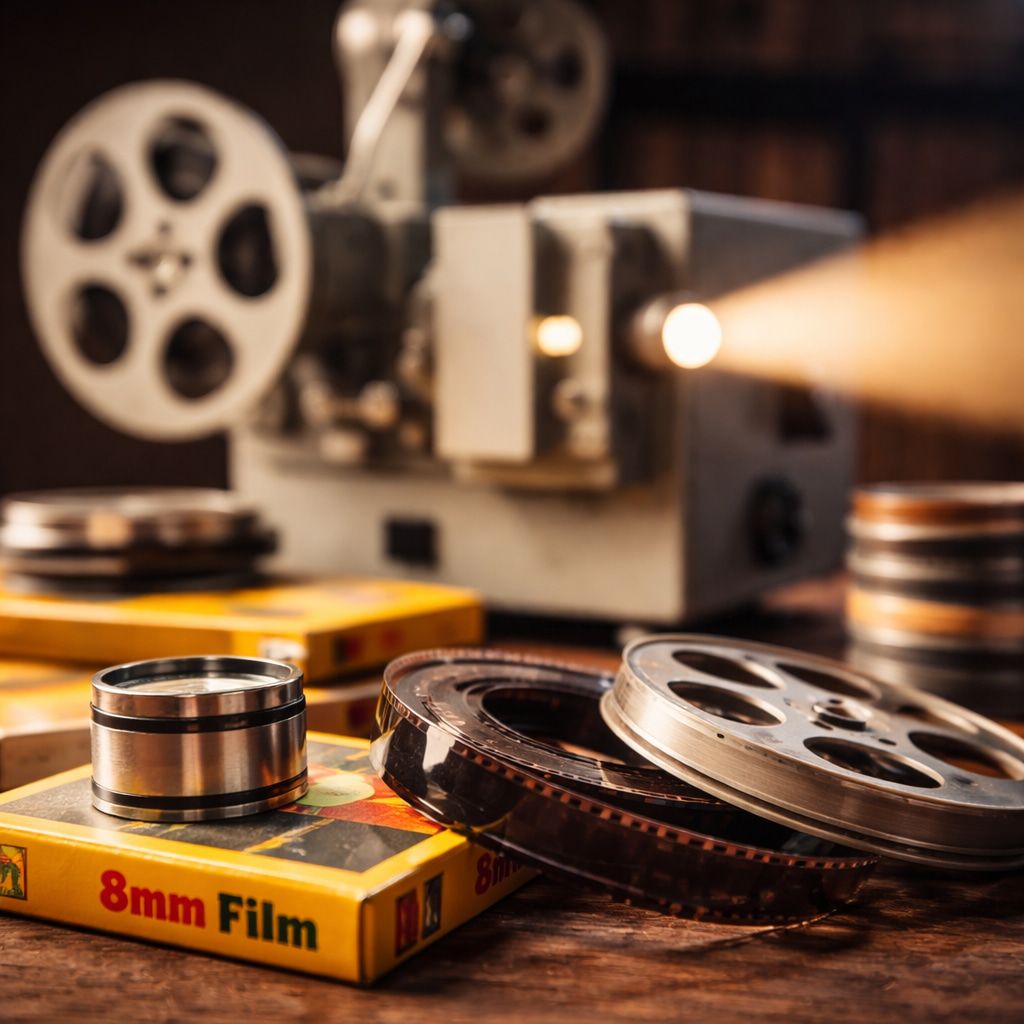
You can watch old 8mm film in two main ways: by projecting it with the correct 8mm projector, or by digitising it into a video file you can watch on a modern screen. The right choice depends on the film’s format and condition, whether you have the equipment, and to be honest, whether you want to go to the trouble of going through the full warts and all vintage experience! If the reel is in good shape, projection may work well. If it is brittle, warped, shrinking, or showing signs of decay, digitising is usually the safer option. Standard 8 and Super 8 are different formats, so the first step is to identify which one you have before trying to view it.
Key Points
Old 8mm film usually means either Standard 8 or Super 8, and each needs the right projector.
Super 8 gives more room to the picture because its perforations take up less space.
Acetate film can decay, producing a vinegar smell and becoming brittle over time.
For most people, digitising is the easiest way to watch old family films without putting extra strain on the original reel.
What is old 8mm film?
When people say "old 8mm film", they are usually talking about Standard 8mm film or Super 8. Both are small-gauge home movie formats, but they are not the same thing. That catches people out all the time. A reel gets found in a cupboard, someone buys the first projector they see online, and then nothing fits.
Super 8 was introduced as a more user-friendly format and gave more picture area within the same width of film. That is one reason many Super 8 transfers look a bit stronger than people expect.
I think this is where the confusion starts. People treat "8mm" as one neat category. It is not. It is a family of formats, and the differences matter once you try to watch the reel.
How do I tell if my film is Standard 8 or Super 8?
Start with the sprocket holes. On Super 8, the perforations are smaller, so the picture frame takes up more of the strip. On Standard 8, the perforations are larger, and the image area looks tighter.
Then check the box or reel label. You may see "Super 8", "Regular 8", or "Standard 8". If there is no label, do not guess. A wrong guess can lead to a jammed projector and damaged perforations.
This bit may sound fussy, but it matters. Old film is less forgiving than people think. Once the sprocket holes tear, the viewing experience goes downhill fast.
Can I watch old 8mm film with a projector?
Yes, provided the projector matches the format and the reel is in decent condition. That is still the classic way to watch home movies, and when it works, it has real charm. The flicker on the wall, the sound of the machine, the small imperfections in the picture - it feels alive in a way a file on a laptop does not.
You will need the correct projector, a working lamp, and usually a take-up reel. You also need a bit of common sense. Many old projectors are now old enough to be unreliable even if they look fine on the outside.
Speaking from experience, my view is simple. Projection is lovely when the setup is right, but it’s a bad idea when people rush in with a machine they have not tested and a reel they have not inspected.
Is it safe to project old 8mm film?
Sometimes. Sometimes not. Shrinkage is a serious issue for small-gauge film, and once 8mm film has shrunk too much, projection can damage it.
Another risk is acetate decay. This is often called vinegar syndrome because the film starts giving off a sharp vinegar smell. Once that process starts, the reel can become more brittle and unstable.
That is why I would not tell anyone to thread an old reel through a projector just because they are curious. Curiosity is fair enough. Damaging the only copy of a family film is not.
How to inspect an old 8mm reel before watching it
Open the box and smell the reel. A strong vinegar smell is a warning sign.
Then look for warped edges, curling, cracked joins, white mould, torn perforations, and sections that seem stiff or brittle. Turn the reel gently by hand. Do not tug at it. Do not force it flat. If the film has old tape splices, assume some of them may be weak.
Storage history matters too. A reel kept in a cool, dry cupboard has a far better chance than one left in a loft or garage. The same kind of care matters across old media, whether you are storing film, slides, negatives and loose photos, or ageing tapes.
What equipment do I need to watch 8mm film at home?
At minimum, you need:
A projector that matches the film format
A take-up reel if the projector requires one
A clean white wall or screen
Enough darkness to see the image properly
Useful extras include a splicer for broken joins, some fresh leader, and a projector that has actually been tested before the reel goes anywhere near it. If the reel has snapped or an old join has failed, a guide to splicing film can help explain the basics.
I would add one more thing to the list: patience. Old film does not reward rushing.
Where can I find an 8mm projector today?
Usually second-hand. Auction sites, camera dealers, local sales, collectors, and specialist film sellers are the usual places. Borrowing one from a relative is also common, though borrowed kit can be in rough shape.
The problem is not just finding a projector. It is finding one that runs smoothly, has a healthy lamp, and will not chew the film. That is why many people end up deciding that transfer is easier than projection.
I think that is often the right call. Buying an elderly projector to watch one or two family reels can become a surprisingly annoying little project.
Can I watch old 8mm film without a projector?
Not as a moving image in the normal sense. You can hold film up to the light and look at the frames, but that only shows tiny still pictures. It does not recreate the film as it was meant to be seen.
If you do not have a projector, the realistic answer is digitising. That gives you a watchable file without depending on ageing projection gear. It is the same basic thinking behind converting other old formats, whether that is VHS or old camcorder tapes.
The best way to watch old 8mm film today: digitising it
Digitising converts the reel into a modern video file. In practice, that means the film is captured frame by frame or transferred through specialist equipment, then turned into something you can watch on a television, phone, or computer.
This is the practical winner for most households. The original reel is handled less. The content becomes easier to share. You can back it up. You can send it to relatives. You do not have to set up a projector every time someone wants to see a birthday party from 1974.
Once the transfer is done, it also helps to think about delivery format. A guide to ordering a memory stick, DVD or cloud download is useful if you are not sure how you want the files returned.
Should I use a DIY film scanner or a professional transfer service?
DIY scanners appeal to people with lots of reels or a genuine interest in film equipment. Fair enough. They can be worth it if you are prepared for a slow process and a fair bit of trial and error.
Professional transfer services are always the better option for fragile or valuable reels. That is especially true when shrinkage or decay may be involved.
My opinion is clear on this one - if the film matters, and most family films do, professional transfer is usually the smarter move. It cuts down the risk and usually gives a better result. The same logic applies to older video formats too. People often start off thinking they will do it themselves, then realise why services such as our Cine Film to Digital service exist!
What quality can I expect from old 8mm film?
It depends on how the film was shot, how it was stored, and how it is transferred. Some reels look soft and shaky because that is how they were filmed. Others look far better than anyone expects once they are scanned well.
Super 8 has a larger usable image area than many people realise, which helps explain why good transfers can still look pleasing today.
There are limits, of course. This is small-gauge film, not modern 4K video. But old home movies do not need to look perfect to be worth watching. In some ways, the imperfections are part of the point.
Can old 8mm film be repaired before viewing?
Minor repairs can be done. A bad splice can be remade. Leader can be replaced. Loose sections can be secured. That is normal maintenance.
What should not happen is forcing badly damaged film through a projector and hoping for the best. If the reel has snapped, splicing film is one thing. If it has severe curl, torn perforations, or obvious decay, that is a different problem.
If the reel is badly damaged, I would stop there and move to transfer rather than projection.
How should I store 8mm film after watching it?
Keep it cool, dry, and dark. That is the basic rule.
Store reels upright in proper containers. Keep them away from lofts, radiators, damp cupboards, and garages. If one reel has a strong vinegar smell, separate it from the others.
This is one of those areas where boring advice is the best advice. Film likes stable conditions. Domestic chaos is rarely stable. The same goes for other fragile formats. Poor storage shortens the life of all sorts of media, which is why people ask things like how long do VHS tapes last.
When should I stop trying to watch it myself?
Stop if the film smells strongly of vinegar. Stop if it is warped, brittle, or badly shrunken. Stop if the perforations are damaged. Stop if the projector has not been tested properly. Stop if the reel is the only copy of something your family would hate to lose.
That may sound cautious. It is cautious. Old film rewards caution. The same applies to mould or physical damage on other formats too, which is why guides on repairing mouldy tapes and repair camcorder tapes tend to focus on short-term fixes before digitising.
Is digitising better than projecting?
For atmosphere, no. For practicality, yes. Projection gives you the original feel, and I completely get why people love that. But digitising is safer for the reel, easier for the family, and much better for long-term access.
So if you want my honest view, digitising is the better answer for most people. Keep the reel safe, and watch the copy. That is the sensible balance.
Conclusion
You can still watch old 8mm film, but the best route depends on the reel itself. Work out whether it is Standard 8 or Super 8, inspect it carefully, and do not rush to project it just because you found a machine online. If the reel is fragile, damaged, or clearly degrading, digitising is the safest and easiest way to see those old memories again. In this case, check our our 8mm Cine Film to Digital page, or if you already know the output format you want, our 8mm Cine to DVD or 8mm Cine to USB pages.